Interventional pulmonology • Anantapur
Four separate procedures. The doctor chooses one only after seeing you, your chest X-ray or CT, and your reports. This page does not book a procedure by itself.
Interventional pulmonologist
Consultant Interventional Pulmonologist
MBBS, DTCD, DNB (Pulmonology), FAPSR · Certified Respiratory Allergy & Sleep Specialist
Ex-Consultant: Yashoda Hospital, Prathima Hospital and KIMS Saveera · APMC Reg. No. 71949
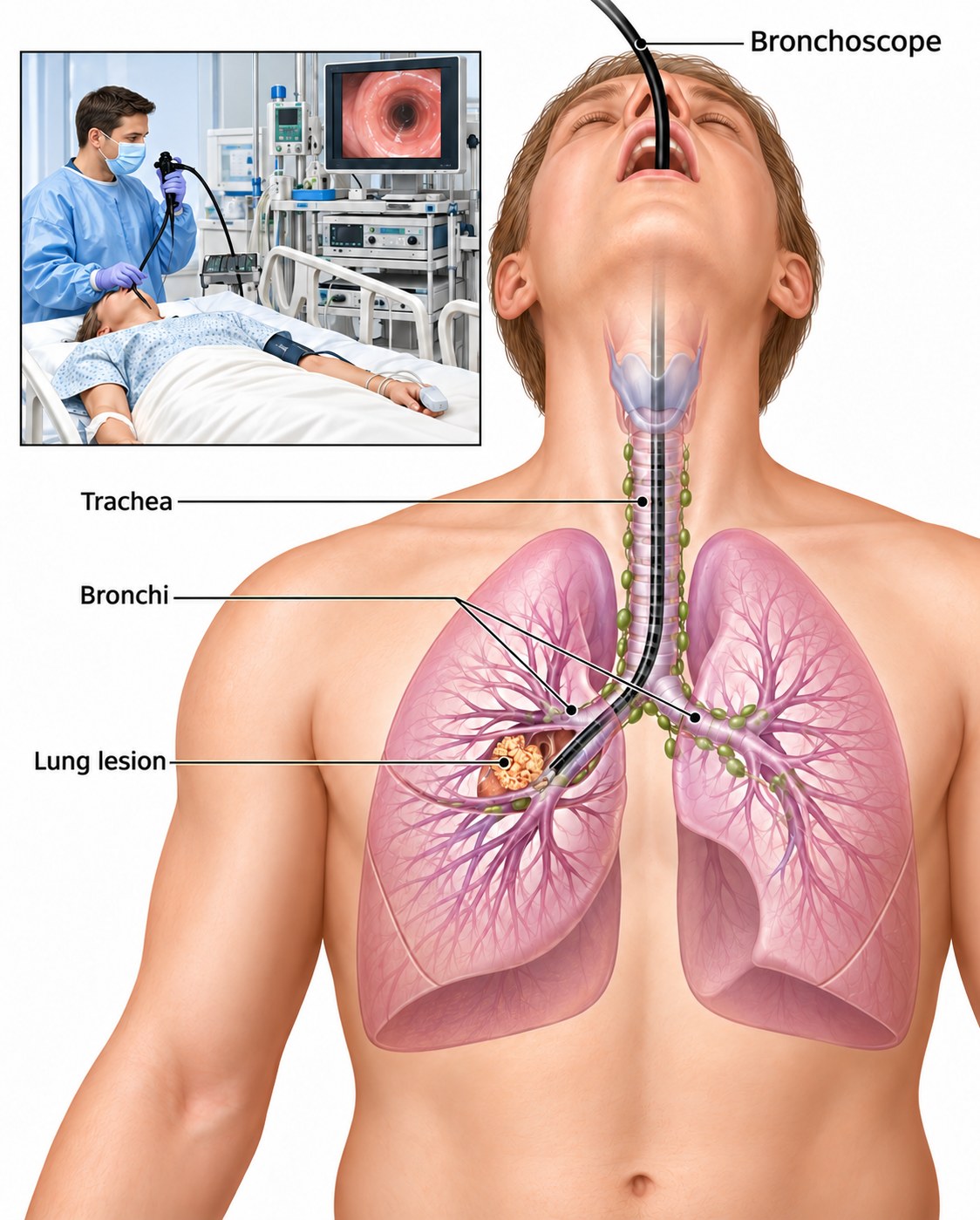
Look inside the windpipe and lung airways. Samples can be taken if needed.
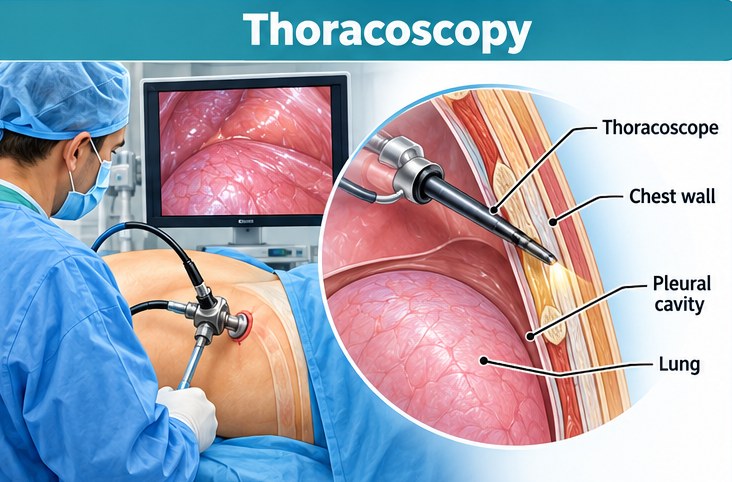
Look into the space around the lung when fluid or the lining needs a closer check.
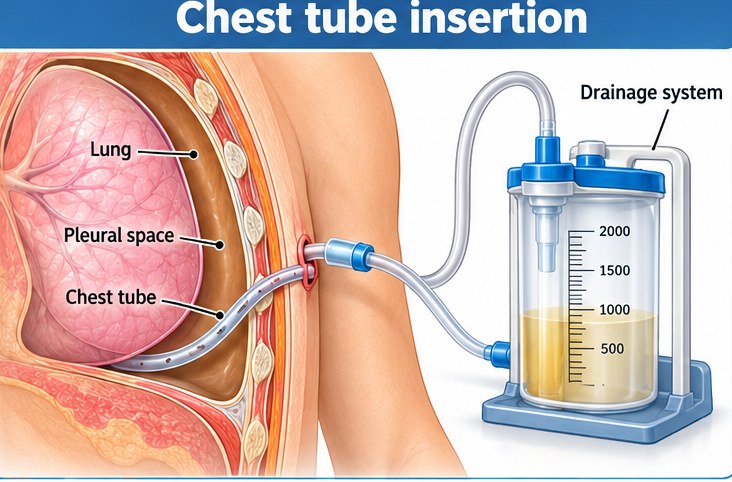
A tube to drain air, fluid or pus that is compressing the lung.
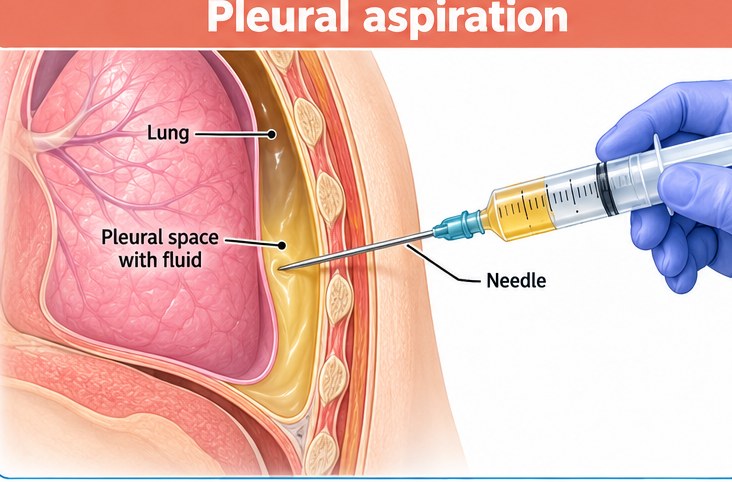
A sample, or a larger removal, of fluid from around the lung.
ఊపిరితిత్తుల పరీక్ష ఏది కావాలో డాక్టర్ చూసి చెప్తారు. ఈ పేజీ చూసి మీరే నిర్ణయించుకోవద్దు.
Airways
A bronchoscopy uses a thin tube with a light and camera, passed through the nose or mouth, to see the windpipe and the branching airways. Most adult tests use a flexible scope. A rigid metal scope is a different procedure and is used only in selected cases, usually under anaesthesia.
It can be diagnostic, to find the cause of a problem, or therapeutic, to treat something the doctor can already see. Many diagnostic studies are day-care. You should not drive yourself home.
General information. Dr. Kona Muralidhara Reddy decides if you need it, and which samples, after the consultation.
Common reasons are infection that is not clear from sputum, a spot or collapse on CT, coughing blood, a long cough that needs a look inside, a suspected tumour, or a blockage. During the same sitting the doctor may wash the airway, take a brush sample, or take a small piece of tissue. If a lymph node beside the airway needs sampling, an ultrasound-guided needle test (EBUS) may be planned separately. It is not added to every bronchoscopy.
After consent, monitoring and local anaesthesia of the throat, most people receive sedation so they are drowsy and remember little. The scope is passed, the airways are inspected, and any planned sample or treatment is done. A routine diagnostic study often takes about 20 to 45 minutes. Treatment such as removing a plug, controlling bleeding or opening a narrow airway takes longer. You are watched until you are awake enough to leave with an attendant.
Do not eat or drink for the hours the hospital tells you, usually 6 to 8 hours. Bring your medicine list. Blood thinners are stopped only if the doctor says so, and not on your own. Blood tests may be asked for. Wear comfortable clothes. An adult attendant is required because of sedation. Tell the team about asthma, COPD, heart disease, allergies and loose teeth.
It is usually not painful. You may feel pressure and the urge to cough. After the test a sore throat, a little blood-streaked sputum, mild cough or a low fever can last a day or two. Do not eat or drink until the throat sensation returns, often 1 to 2 hours, so that you do not choke. Most people who had a routine study can do light work the next day. Do not plan important work or driving on the same day.
What the doctor saw is known the same day. Infection reports often take 1 to 3 days, and longer if tuberculosis culture is sent. A biopsy report takes several days. A normal look does not always rule out disease farther out in the lung, where the scope cannot reach. The plan after the report is explained in review, not on this page.
Call if there is more than a streak of blood, increasing breathlessness, chest pain, a high fever, or if you cannot swallow. These are uncommon after a routine study. Mild throat discomfort alone can be watched.
Around the lung
Thoracoscopy uses a thin camera, a thoracoscope, to look into the chest through one or more small openings between the ribs. The doctor can see the outer surface of the lung, the pleural lining, and the space where fluid collects, and can take a biopsy.
At this hospital the usual procedure is medical thoracoscopy, also called pleuroscopy. It is done by the pulmonologist to find the cause of fluid that a needle sample has not explained, to biopsy the lining, or to drain fluid. Video-assisted chest surgery (VATS), in which a surgeon removes part of a lung under general anaesthesia, is a different operation and is not the same as this test.
It is considered when a chest X-ray, CT or a pleural fluid sample still does not explain the problem, when fluid keeps returning, or when the pleural lining itself needs to be seen. It is not the first test for every cough or every small amount of fluid.
Do not eat or drink on the day if you are told to fast. Blood-thinning medicines are stopped only if Dr. Kona Muralidhara Reddy asks you to. Bring your reports and an adult attendant. Tell the team about heart disease, allergies and pregnancy.
The skin is cleaned and numbed. Sedation is used so you are drowsy. A small opening is made and the camera is passed. Samples are taken if planned. A chest tube is often left for a short time so air or fluid can drain. Some people go home the same day with an attendant. Others stay until the tube is removed and a chest X-ray is satisfactory. Soreness at the opening is expected and is treated. Full comfort can take longer than the day of the test.
Call for increasing breathlessness, chest pain, fever, bleeding from the site, or swelling around the dressing. A little pain on the first day is common. A biopsy report takes several days and is explained at review.
Drainage
A chest tube, or thoracostomy tube, is a soft drain placed through a small cut between the ribs into the pleural space. It lets out air, fluid, blood or pus that is pressing on the lung. A needle tap removes fluid and then comes out. A chest tube stays in and keeps draining.
It is used for a collapsed lung from air, a large fluid collection, blood in the chest, or infected fluid that a needle cannot clear. In an emergency it is done at once. When it is planned, the team reviews your medicines first.
You are positioned with the head raised and the arm up. The skin is cleaned and numbed with local anaesthetic. You will feel pressure, not a sharp cut, once the area is numb. A small opening is made and the tube is passed. It is stitched or secured, dressed, and connected to a drainage bottle. The procedure itself is often about half an hour. A chest X-ray is taken afterwards to confirm the position and the lung.
It stays until the air or fluid has drained and the lung has stayed expanded. That is often a few days. It can be longer if fluid keeps forming. This is an admission. Do not kink the tube, lift the bottle above chest level, or pull the tube. Showering and activity are allowed only as the nurse explains. After removal, the opening is dressed and usually heals over the next few weeks.
Tell the nurse immediately if breathlessness suddenly increases, the bottle disconnects, the dressing is soaked, or you feel air crackling under the skin. Pain at the tube site is expected and is treated. Bleeding, high fever or a tube that has slipped needs a doctor the same day.
Fluid sample
Pleural aspiration, also called thoracentesis, removes fluid from the pleural space with a needle or a thin catheter. A small sample is sent to the laboratory when the cause is unknown. A larger amount may be removed if the fluid is making you breathless. The tap relieves pressure. It does not, by itself, cure the illness that produced the fluid.
Fluid can collect with heart failure, infection including tuberculosis, cancer, liver or kidney disease, a clot in the lung, and several other illnesses. The test is chosen only after examination and a chest X-ray or CT.
You usually sit on the edge of the bed, leaning forward, or you lie on your side. The spot is marked using the X-ray and, when needed, a bedside scan. The skin is cleaned and numbed. The needle passes between the ribs. Removing fluid can feel uncomfortable and often makes you cough for a short time as the lung expands. The needle is then removed and a dressing is applied. Most diagnostic taps are day-care. You need an attendant if you have been given a sedative. Do not drive yourself if you feel faint.
The dressing can usually come off the next day. You may shower. Avoid heavy lifting, jogging and swimming for a few days, and avoid flying for about a week unless the doctor says otherwise. Desk work is often possible within a few days. Coughing for up to an hour after the tap is common. The laboratory result is not ready the same hour. Some conditions need the tap repeated. It is not repeated unless there is a reason.
Call for chest pain, pain on a deep breath, coughing blood, sudden breathlessness, fainting, or fever, spreading redness or bleeding at the site. These can be a sign of a small air leak, bleeding or infection. Mild soreness after the numbness wears off is expected.